Reverse Mortgage for Loan: How It Can Help Senior Citizen?
The Reverse Mortgage for Loan(RML) was Introduced in India in 2007 to boost the life of house-owning senior citizens. RML is a loan that allows them to fulfill their day-to-day expenses concerning food, medicine, and even so repair of the house. At an age when the majority of people don’t have a daily source of income in India, Reverse Mortgage for Loans is hope for them.
The minimum age of availing the RML is 60 years, regardless of the gender difference, and if a couple seeks a joint loan, then the age limit for the spouse is 55 years or above. The applicant must have his/her own purchased house as RML cannot be secured against the ancestor’s property. If you inherited the property, RML isn’t an option; you need a home you own to apply. There are various factors on which banks and other financial institutions assess the worth of property. But it’s minimum residential life should not be less than 20 years.
A reverse mortgage for a loan is a unique kind of loan in which a borrower, usually a senior citizen only, can mortgage a property he or she already owns to a bank. The bank then pays a monthly amount to the borrower for the required tenure. Banks pay borrowers EMIs in this loan, hence the term ‘reverse mortgage.
What is Reverse Mortgage for Loan?
A reverse mortgage for a loan is a good way for senior citizens to receive some funds if they need liquid cash. Although, they need to have a property in their name. Using their already owned property as a mortgage, the senior citizens can borrow money from a bank which is paid via monthly installments by the bank.
Eligibility of Reverse Mortgage for Loan?
The eligibility criteria for a reverse mortgage loan are:
- The borrower should be a citizen of India and should have a minimum age of 60 years.
- Married couples qualify for the loan if one partner is 60 or older and the other is at least 55.
- The borrower owning properties, either self-acquired, inherited, or occupied by themselves, can use reverse mortgages as a financial tool. The title of the property should clearly indicate the borrower’s ownership. Also, it should be free from any liability, debt, or other obligations.
How Reverse Mortgage for Loan Work?
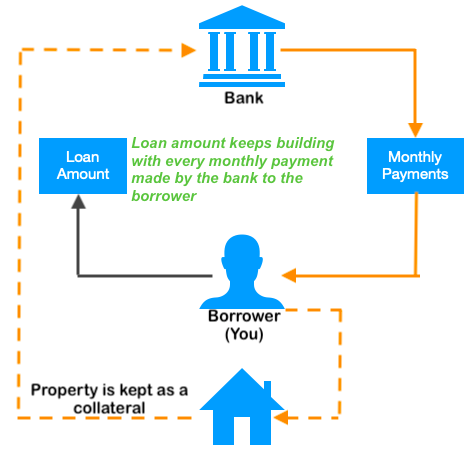
- Collateral:
A borrower pledges the property as collateral to a bank or any financial organization that issues a loan to the borrower based on the valuation of the property. - Monthly payments:
The bank provides borrowers with fixed periodic payments at a specified interest rate in exchange for a pledged property. Instead of making payments, borrowers enjoy financial security through regular payments from the bank in a reverse mortgage. Borrowers receive ‘reverse EMIs’ — fixed payments from the lender throughout the loan’s fixed term.

Comments
Post a Comment